


What are the requirements for digital instruments in industry?
Release time:
2021-02-05
Author:
Digital instruments used in industrial automation must possess specific characteristics. The key aspects include the following: the measured parameters of industrial automation instruments typically comprise temperature, pressure, flow rate, and liquid level—physical quantities that vary continuously over time and are non-electrical in nature.
An important distinction between industrial instruments and laboratory instruments is that the former must withstand a wide range of harsh conditions encountered in production environments and exhibit strong resistance to various types of interference. Consequently, when designing and manufacturing such digital instruments, it is essential to assess the environmental conditions at the point of use and implement appropriate anti‑interference measures to ensure robust environmental adaptability. It is also necessary to address scale conversion so that the instrument’s displayed values are expressed in units consistent with the original physical quantity being measured. As modern manufacturing becomes increasingly automated, instruments are required to continuously measure multiple parameters, provide automatic alarms for out‑of‑range conditions or malfunctions, and generate printed records. Moreover, to achieve comprehensive control and management of the production process, measurement data are often transmitted to a computer for processing and storage, enabling parameter regulation according to predefined rules. Accordingly, digital instruments must be equipped with digital output interfaces and data‑communication capabilities.
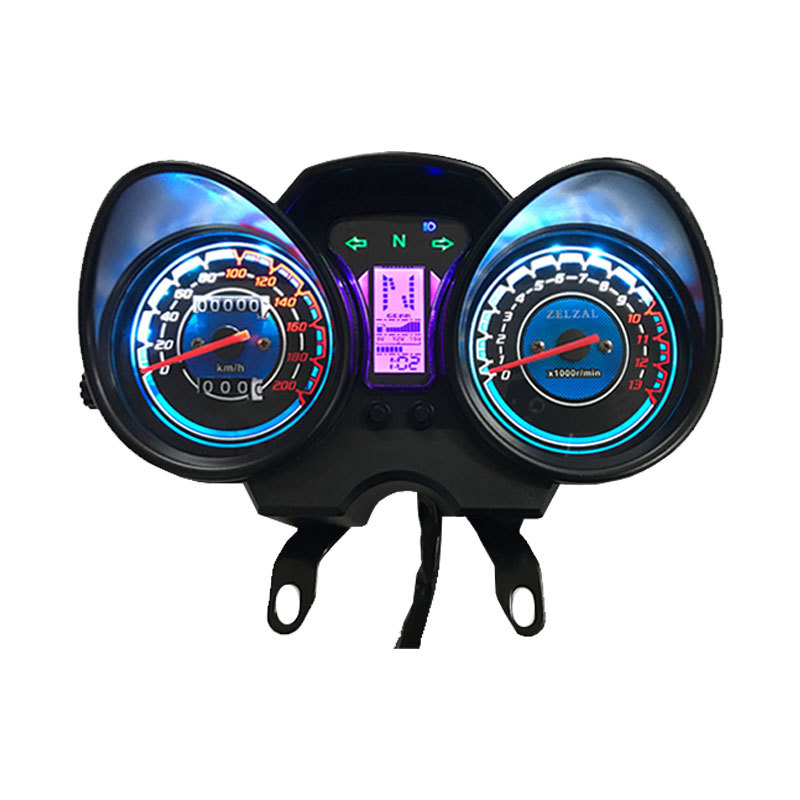
Digital Instrument Signal Sampling and Quantization Digital instruments used in industrial automation must possess specific performance characteristics. These primarily include the following aspects: In industrial automation, the measured parameters typically encompass temperature, pressure, flow rate, liquid level, and others. These physical quantities are non-electrical variables that vary continuously over time. Non-electrical signals are converted into standardized electrical signals via various transmitters or A/D and D/A converters. Moreover, the electrical signals output by different sensors often exhibit nonlinear relationships with the measured parameters, whereas analog-to-digital converters generally operate on a linear basis. Consequently, when displaying measurement values in digital form, it is essential to account for nonlinear correction to ensure measurement accuracy.
An important distinction between industrial instruments and laboratory instruments is that the former must account for the harsh conditions typically encountered in production environments and exhibit robust resistance to various types of interference. Consequently, when designing and manufacturing such digital instruments, it is essential to assess the environmental conditions at the instrument’s intended operating site and implement appropriate anti‑interference measures to ensure the instrument’s ability to perform reliably under diverse environmental conditions.
It is necessary to account for scale transformations so that the instrument’s display units are consistent with those of the original physical quantity being measured. As modern manufacturing becomes increasingly automated, instruments are required to continuously measure multiple parameters, provide automatic alarms (for out-of-range conditions or malfunctions), and generate printed records. Moreover, to enable control and management of the production process, instrument readings are often transmitted to a computer for computation and storage, allowing parameter control according to predefined rules. Consequently, digital instruments must be equipped with digital output and data‑communication capabilities.
Digital Instrument Signal Sampling and Quantization
Analog signals in digital instruments: amplitude and time are continuous. Discrete analog signals: continuous amplitude, discrete time. Digital signals: both amplitude and time are discrete. Sampling: the process of converting an analog signal into a discrete analog signal at fixed intervals. Quantization: the process of mapping the amplitude of a discrete analog signal to a digital representation using a set of codes (binary).
According to the sampling theorem, in order for the sampled output signal U*(t) to accurately reconstruct the original input analog signal UI(t), for an analog signal with a finite bandwidth, the sampling period TS must satisfy the following condition:
Digital meter sampling and hold
After an analog signal is sampled, a series of sampling pulses is obtained. The width of these sampling pulses, τ, is typically very short. Before the next sampling pulse arrives, the amplitude of each sampled pulse must be held temporarily for conversion. Consequently, a sample-and-hold circuit is required following the sampling circuit.
Digital Instrument Quantization and Encoding
Uo remains constant during the sampling period, at which point the circuit quantizes and encodes Uo. Quantization: The sampled-and-hold signal Uo is divided into integer multiples of a small quantization step size S, as specified by the requirements. Encoding: The quantized value is represented in binary code, which constitutes the ADC’s output. Because digital instruments have a finite number of bits, a K‑bit binary code can represent only 2^k distinct values, so it can only approximate a particular quantization level. There are two quantization methods: truncation (rounding down) and rounding (rounding up).
Analog signals in digital instruments: amplitude and time are continuous. Discrete analog signals: continuous amplitude, discrete time. Digital signals: both amplitude and time are discrete. Sampling: the process of converting an analog signal into a discrete analog signal at fixed intervals. Quantization: the process of mapping the amplitude of a discrete analog signal to a digital representation using a set of codes (binary).
According to the sampling theorem, in order for the sampled output signal U*(t) to accurately reconstruct the original input analog signal UI(t), for an analog signal with a finite bandwidth, the sampling period TS must satisfy the following condition:
Digital meter sampling and hold
After an analog signal is sampled, a series of sampling pulses is generated. The duration of these sampling pulses, τ, is typically very short. Before the next sampling pulse arrives, the amplitude of each sampled value must be held temporarily for conversion. Consequently, a sample-and-hold circuit is required following the sampling circuit.
Digital Instrument Quantization and Encoding
Uo remains constant during the sampling period, at which point the circuit quantizes and encodes Uo. Quantization: The sampled-and-hold signal Uo is divided into integer multiples of the smallest quantization step S, as specified by the requirements. Encoding: The quantized value is represented in binary code, which constitutes the ADC’s output. Because digital instruments have a finite number of bits, a K‑bit binary code can represent only 2^k distinct values, thus approximating only one of the quantization levels. There are two quantization methods: truncation (rounding down) and rounding up.
Keywords:
Do you have any question?
Fill in your mobile phone and email information, and we will contact you in time to solve your problem as soon as possible.
Related Blog
2026-09-30
2026-09-29


Contact Seiko
Address: No. 50, Maoshan 1st Road, Pingling, Gonghe Town, Heshan City, Jiangmen City, Guangdong, China